El laberinto de la soledad
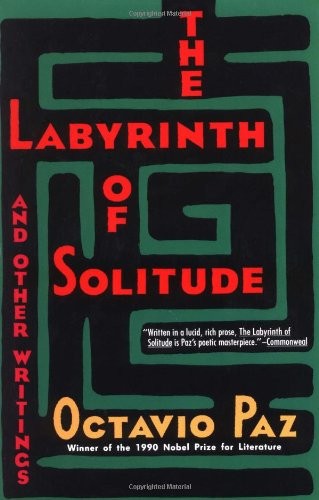
The Labyrinth of Solitude
 latin america
 nobel prize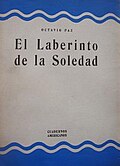
The Labyrinth of Solitude is a 1950 book-length essay by the Mexican poet Octavio Paz. One of his most famous works, it consists of nine parts: "The Pachuco and other extremes", "Mexican Masks", "The Day of the Dead", "The Sons of La Malinche", "The Conquest and Colonialism", "From Independence to the Revolution", "The Mexican Intelligence", "The Present Day" and "The Dialectic of Solitude". After 1975 some editions included the three-part essay "Posdata", which discusses the massacre of hundreds of Mexican students in 1968. The essays are predominantly concerned with the theme of Mexican identity and demonstrate how, at the end of the existential labyrinth, there is a profound feeling of solitude. As Paz argues:Solitude is the profoundest fact of the human condition. Man is the only being who knows he is alone, and the only one who seeks out another. His nature – if that word can be used in reference to man, who has 'invented' himself by saying 'no' to nature – consists of his longing to realize himself in another. Man is nostalgic and in search for communion. Therefore, when he is aware of himself he is aware of his lack of another, that is, of his solitude.Wikipedia →
Translations
Original Language Editions
No original language editions yet.