Family Lexicon
Author
Original Work
Translator
Foreword / Afterword
Peg Boyers
Language
Year
2017
Publisher
Pages
221
ISBN
978-1590178386
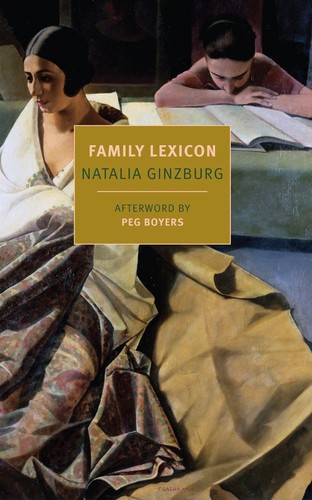
A masterpiece of European literature that blends family memoir and fiction An Italian family, sizable, with its routines and rituals, crazes, pet phrases, and stories, doubtful, comical, indispensable, comes to life in the pages of Natalia Ginzburg’s Family Lexicon. Giuseppe Levi, the father, is a scientist, consumed by his work and a mania for hiking—when he isn’t provoked into angry remonstration by someone misspeaking or misbehaving or wearing the wrong thing. Giuseppe is Jewish, married to Lidia, a Catholic, though neither is religious; they live in the industrial city of Turin where, as the years pass, their children find ways of their own to medicine, marriage, literature, politics. It is all very ordinary, except that the background to the story is Mussolini’s Italy in its steady downward descent to race law and world war. The Levis are, among other things, unshakeable anti-fascists. That will complicate their lives. Family Lexicon is about a family and language—and about storytelling not only as a form of survival but also as an instrument of deception and domination. The book takes the shape of a novel, yet everything is true. “Every time that I have found myself inventing something in accordance with my old habits as a novelist, I have felt impelled at once to destroy [it],” Ginzburg tells us at the start. “The places, events, and people are all real.”— Google Books
Press Reviews
- The Guardianby Emily Rhodes · Oct 2018
This novel-cum-memoir paints an unusual portrait of everyday domestic life in Italy from the 1920s to the 50s
User Reviews
Sign in to leave a review.
No reviews yet. Be the first!