Diaries, 1899-1941
Author
Original Work
Translator
Editor
Philip Payne
Foreword / Afterword
Philip Payne, Mark Mirsky
Language
Year
1998
Publisher
Country
United States
Pages
557
ISBN
9780465016501
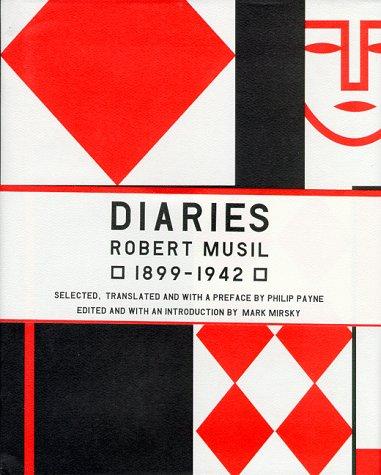
The Diaries of Robert Musil are a secret look into the life and mind of a writer whose fiction embodies one of the twentieth century's daring leaps of consciousness. Ranked with Franz Kafka, Marcel Proust, and James Joyce in the pantheon of European modernists, Musil attempted to apply the precision of his scientific training to the utmost bounds of the imagination. In a series of notebooks kept through most of his literary career, Musil reflected, often through stunning epigrams, on his childhood, his erotic life, his methods of creative thought and his fellow writers. An indispensable guide to his fiction, essays and plays, the pages of the diaries provide a skeleton key for his complex unfinished masterpiece The Man Without Qualities. Known for extreme personal reticence among his contemporaries, Musil in the diaries (which were never intended for publication), speaks nakedly of himself and the chaotic events he lived through.This selection from the diaries is based on the exhaustive 1976 German edition prepared by Adolf Frisé. Most of its sketches, anecdotes and personal reflections have been translated into English. An acute political and cultural observer, Musil recorded in these pages his experiences of Berlin at the outbreak of World War I and service in the Austrian army on the Italian Front. The last notebooks chronicle Hitler's rise to power and Musil's exile in Switzerland. The diaries are valuable in a number of ways: as a first-hand historical document of life in twentieth century central Europe, as a kind of unwitting autobiography of a great novelist, and as a writer's workbook that details the moods of artistic adventure.In the diaries Robert Musil challenged himself to think about a reality beyond the world that could be apprehended by logic, to entertain the possibilities of forbidden eroticism, to imagine the hidden mystical life of Fascist Europe, and to turn the question of sexual gender into the puzzle of identity.— Google Books
Press Reviews
No press reviews curated yet — try the outside-search links below.
User Reviews
Sign in to leave a review.
No reviews yet. Be the first!