Woman at War
Author
Original Work
Translator
Foreword / Afterword
Nicolas J
Language
Year
1988
Publisher
Country
United States
Pages
296
ISBN
9780934977128
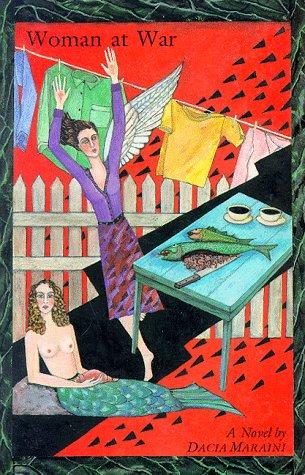
WOMAN AT WAR is a foundational text of Italian feminist literature. It takes the form of a diary, tracing a young woman’s growing self-awareness. Beginning as a passively absent narrator, Vannina encounters a fascinating array of characters during the holiday she takes on an island in the Bay of Naples. Back in Rome, she rejects her marriage and moves toward complete, if difficult, independence. Maraini’s writing is superb. Its warm and sensual style gives life to details: the food of the Mediterranean, the smell of its herbs, the acts of making coffee and making love. First English translation by Mara Benetti & Elspeth Spottiswood. Messina, Annie The Myrtle & the Rose FEARING THE UPROAR this novel would causein Italy, in 1981 Messina took the pseudonym Gamîla Ghâli, leaving it to her friend, Leonardo Sciascia, to introduce Ghâli to the reading public. Annie Messina brings her Sicilian heritage and her years of living in Egypt to bear on this orientalizing fiction. Placing Messina alongside Marguerite Yourcenar, Mary Renault and Mari Mori. Le Mondedescribes this novel as one “long variation on the theme [each man kills the thing he loves], presented as a fable.... We find in this little marvel, by turns, the abstract and conceptual tone of a moralist and the provocative fantasy of a sly storyteller.” First English translation by Jessie Bright. Palazzeschi, Aldo Man of Smoke PALAZZESCHI’Sexperimental anti-novel, was first published in 1911 as part of the Italian Futurist movement. It is now recognized as one of the most original creations of early 20th-century fiction. Perelà is literallya “man of smoke.” His popular rise and disgraceful fall make for an often hilarious and sometimes nightmarish social satire. It offers an existential vision that stands besides those of Pirandello, Svevo, Calvino, or Musil. First English translation of Il Codice di Perelà. Introduction by Nicolas J. Perella & Ruggero Stefanini. Pratolini, Vasco Family Chronicle FAMILY CHRONICLE tells the story of two brothers: one leads a life of privilege, while the other survives as a struggling writer. Pratolini’s brilliant prose reveals the depth of spiritual strength in these two men as they draw together once again and develop bonds of love and trust for one another. Family Chronicle (Cronaca familiare) has been critically and popularly recognized as among the most important Italian novels of the twentieth century. Vasco Pratolini, one of Italy’s leading neo-realist novelists and screen writers, frames his tale against the backdrop of the urban poor of Florence, the rise of Fascism, and the disastrous effects of war. First English translation by Martha King. Sarsini, Monica Eruptions ERUPTIONS is a collection of short fiction by Monica Sarsini, a contemporary writer and multimedia artist from Florence. It comprises selected translations from two of her works, Crepacuore, her 1985 work on colors, and Crepapelle, her 1988 reflections on the senses. All of these pieces are sensual explorations in Sarsini's experimental, yet concrete narrative style. Sarsini’s writing on color was the basis for a series of short narrative pieces that appeared inNew Italian Women, introducing Sarsini to American readers, and most recently inAfter the War: A Collection of Short Fiction by Post-War Italian Women. Translated by Maryann De Julio. Sgorlon, Carlo ALR Army of the Lost Rivers IN THE SUMMER OF 1944 a Cossack army complete with its dependents — women, children, and the aged, along with horses, camels, tents, and icons — descended on Friuli. In exchange for supporting them against the Red Army, the Germans had promised this region in mountainous, northeastern Italy as a new homeland. But then the Germans abandoned both the invading Cossacks and the native Friulans to their terrible fates. Beneath the nightly bombings of the Flying Fortresses and between the retreating Germans and the advancing Allies, townspeople, partisans and Cossacks are caught in an ominous web. First English translation by Jessie Bright of L’Armata dei fiumi perduti. Sgorlon, Carlo WT The Wooden Throne IN THIS MODERN RETELLINGof the Parsival legend, the throne belongs to the storyteller who keeps the community alive through the magic of myth and narrative. Only occasionally, by some hand of fate, does the outsider find and then refind the house of the throne as a stage in his own quest for meaning and love. Winner of the Premio Campiello when it was published, The Wooden Throne has gone through nearly 20 printings since and is now considered a 20th-century Italian masterpiece. It has been translated into French, Spanish and Slavic. First English translation by Jessie Bright.— Google Books
Press Reviews
No press reviews curated yet — try the outside-search links below.
User Reviews
Sign in to leave a review.
No reviews yet. Be the first!