The Knight Has Died
Author
Original Work
Translator
Language
Year
1990
Publisher
Pages
102
ISBN
0807115444
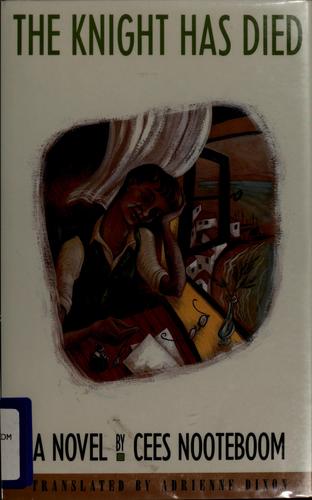
Cees Nooteboom’s distinctive narrative style has singled him out as one of the important voices of contemporary fiction. His work, which Michael Malone, writing in the New York Times Book Review, has compared to that of Nabokov, Calvino, and Borges, frequently blurs the one between the real and the surreal. The Knight Has Died, Nooteboom’s fifth novel to be published in the United States, was written in the early 1960s. Nooteboom had been called a metafictional writer, and though the term metafiction had not even been coined at the time he wrote this mysterious book within a book within a book, it certainly applies. The Knight Has Died is a fascinating amalgam of moods and moments; it is occasionally nightmarish, frequently passionate, and always compelling. At the center of the novel is Andre Steenkamp, a Dutch writer who goes to a Mediterranean island to write a novel about a Dutch writer who goes to a Mediterranean island to write a novel. But the voice of the narrative is not Steenkamp’s, rather it is that of a writer who after Steenkamp’s death attempts to finish the novel Steenkamp has begun. Through the narrator’s efforts to juxtapose the hard edges of the island’s reality with the impressionistic bent of Steenkamp’s mind, Nooteboom explore not only the timeless themes of love, jealousy, and death but also the nature of neurosis and the complex workings of the artistic imagination. -- Provided by publisher.— Google Books
Press Reviews
No press reviews curated yet — try the outside-search links below.
User Reviews
Sign in to leave a review.
No reviews yet. Be the first!