Θεαίτητος
aka Theaítētos
Theaetetus
Author
Language
Year
c. 370-365 BC
Country
Classical Athens
Genre
Speech / Dialogue
 graeco-roman
 dialogues
 idealism
 philosophy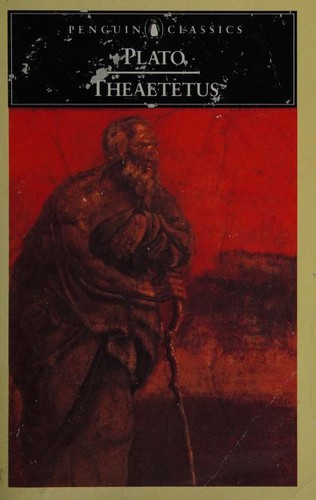
The Theaetetus is a philosophical work written by Plato in the early-middle 4th century BCE that investigates the nature of knowledge, and is considered one of the founding works of epistemology. Like many of Plato's works, the Theaetetus is written in the form of a dialogue, in this case between Socrates and the young mathematician Theaetetus and his teacher Theodorus of Cyrene. In the dialogue, Socrates and Theaetetus attempt to come up with a definition of episteme, or knowledge, and discuss three definitions of knowledge: knowledge as nothing but perception, knowledge as true judgment, and, finally, knowledge as a true judgment with an account. Each of these definitions is shown to be unsatisfactory as the dialogue ends in aporia as Socrates leaves to face a hearing for his trial for impiety.Wikipedia →
Translations
Original Language Editions
No original language editions yet.